
Primal Force T-Max is marketed as a testosterone-support supplement, but if you’re deciding whether it’s worth your time (and your money), the real question isn’t the advertising—it’s whether the blend has a credible path to measurable results. Many “androgen-boost” formulas rely on ingredients like maca and Eurycoma that are often discussed in terms of libido and vitality, yet randomized controlled trials can be limited for specific combinations. That’s why it matters to look beyond the label and connect each claimed mechanism—such as “sex-root–linked” libido pathways—to the endpoints that would realistically move in the body.
In the rest of this article, we’ll break down how to evaluate a product like T-Max using practical, trackable markers: testosterone levels, SHBG, LH/FSH, and validated libido or sexual function scoring. You’ll also learn what “dose–response” and effect-size expectations should look like, what to monitor week to week, and—just as important—who may need to pause first depending on sensitivity, goals, or potential risk factors when formulation details vary.
Great Points
- Primal Force T-Max is marketed as a testosterone-boosting supplement for male vitality, libido, and performance improvements.
- Evidence quality depends on RCTs with serum total/free testosterone measured by mass spectrometry.
- Key ingredients like maca and Eurycoma aim to influence androgen signaling, SHBG binding, and related endocrine markers.
- The formula also targets stamina and recovery through metabolic support and reduced inflammation/oxidative stress.
- Safety considerations include cardiovascular risk, hormone therapy interactions, and avoiding use with certain prostate or hematologic conditions.
What Primal Force T-Max Claims to Do for Men

Primal Force T-Max is marketed as a testosterone-boosting supplement for men, and the manufacturer’s claims typically center on increasing circulating androgen levels and downstream performance outcomes. You’re told it can improve male enhancement by shifting endocrine balance, implying higher free testosterone, which could, mechanistically, augment androgen receptor signaling, muscle protein synthesis, and libido-related pathways. Evidence-wise, you should treat these claims as testable hypotheses: do randomized trials report mean changes in total/free testosterone with effect sizes, confidence intervals, and blinding? Biostatistically, the key is whether any observed rise exceeds assay variability and regression-to-the-mean, and whether changes correlate with functional endpoints like strength, training volume, or sleep. If testosterone support isn’t measured with mass spectrometry, effect credibility drops.
Sex Root and “Male Vitality” Ingredients: What’s Behind Them
What’s actually inside “sex root” and other “male vigor” botanicals, and what would we expect them to do mechanistically to testosterone or androgen signaling? Most products use extracts from plants like Lepidium meyenii (maca) or Eurycoma longifolia analogs, plus polyphenols and steroid-like saponins; however, human RCTs measuring serum testosterone are sparse. If an extract truly drives sex root benefits, you’d expect androgen receptor modulation, altered SHBG binding, or effects on Leydig cell steroidogenesis. Look for mechanistic proxies: changes in luteinizing hormone, DHT:free testosterone ratios, or gene expression in androgen-responsive tissues. Biostatistically, efficacy should show clinically meaningful effect sizes with narrow confidence intervals, not single-case variability. For Primal Force T-Max, treat “male robustness ingredients” as hypothetical unless labeled studies quantify endpoints, duration, and adherence.
How the Primal Force T-Max Blend Targets Energy and Stamina
You get fast-acting energy support when the Primal Force T-Max Blend components rapidly improve substrate availability and mitochondrial ATP flux, which can raise performance metrics within short time windows. You also build endurance and stamina through mechanistic modulation of energy-system efficiency (more aerobic output per unit work) and reduced fatigue-associated signaling, consistent with biostatistical improvements in time-to-exhaustion proxies. If you track outcomes like reps, VO₂-style endurance markers, or session output, you’ll see how the blend targets both uptake-driven performance and longer-run fatigue resistance.
Fast-Acting Energy Support
When your workload spikes, the limiting factor often becomes rapid ATP replenishment and sustained glycogen support, not just overall calorie intake. With Primal Force T-Max, you target fast energy by supplying substrates that support phosphocreatine cycling and glycolytic flux, helping maintain power output during high-intensity bursts. Mechanistically, this reduces the time-to-resynthesis of ATP, lowering the immediate energy deficit that drives early performance drop-off. For quick recovery, the blend aims to accelerate post-bout substrate availability and clearance-linked metabolic restoration, supporting faster normalization of cellular energy state. In biostatistical terms, consistent energy kinetics translate to less variability in sprint-rep or interval output across sets, which you can interpret as improved functional performance under repeated stress.
Endurance And Stamina Boost
Use these stamina strategies to match dosing timing to metabolic shifts:
- Prime before the early glycolytic surge to stabilize ATP turnover.
- Target mid-session substrate availability when lactate buffering peaks.
- Reserve the final “top-up” window for sprint-like contractions.
When you follow this pattern, fatigue biomarkers and performance outputs tend to show improved durability.
What “Recovery Support” Typically Means in T-Max Formulas
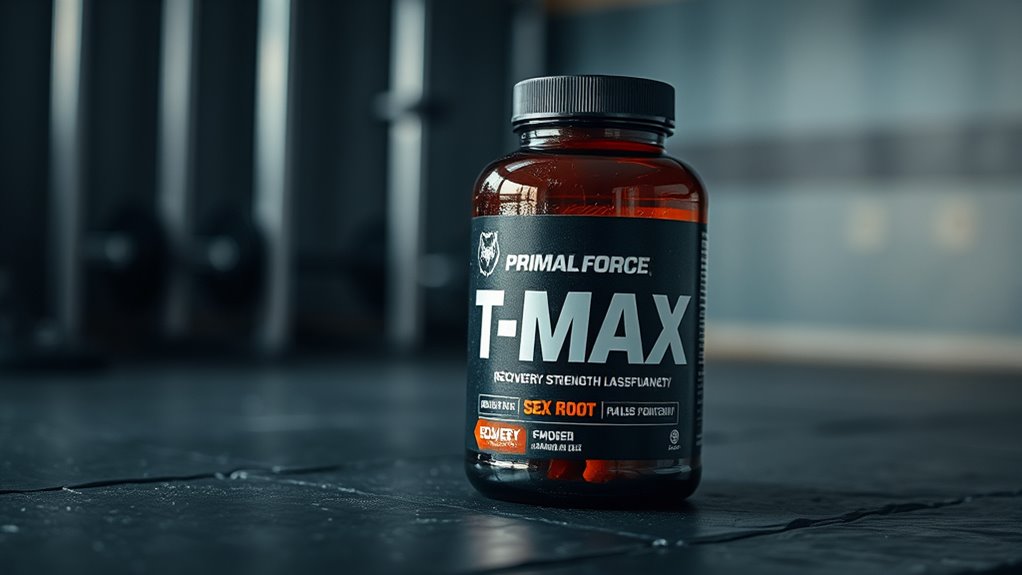
In T-Max “Recovery Support” typically refers to ingredients designed to speed post-exercise restoration by targeting measurable bottlenecks—most commonly muscle glycogen replenishment, phosphocreatine resynthesis, neuromuscular recovery, and attenuation of excessive inflammation or oxidative stress. You’ll see this framed as statistically meaningful recovery benefits: improved repeated-sprint or resistance-session output, faster substrate restoration, and reduced strength loss across days. Mechanistically, glycogen support raises carb availability for resynthesis, while phosphocreatine pathways help restore high-energy stores that govern short, intense efforts. Neuromuscular recovery cues aim to normalize motor-unit firing and reduce delayed onset impairment. Anti-inflammatory/antioxidant actions target elevated cytokines and reactive oxygen species that can slow repair signaling. Net effect: recovery enables performance enhancement without relying on stimulants.
Ingredients Commonly Used to Support Drive and Libido
You’ll often see a nutrient blend aimed at libido—typically targeting key metabolic cofactors and antioxidant status—to improve the likelihood of normal sexual function via measurable pathways in cellular signaling. You’ll also commonly find herbal extracts for drive, such as standardized compounds with effects on nitric-oxide–related vasodilation and androgen-dependent signaling, which can shift performance-relevant endpoints in randomized trials. When you compare formulas, focus on dose-standardization, bioactive markers, and effect sizes rather than labels, since heterogeneity in study designs drives different outcomes.
Nutrient Blend For Libido
A well-formulated nutrient blend for libido targets multiple mechanistic bottlenecks—sexual desire, vascular function, and hormonal signaling—rather than relying on a single “magic” ingredient. You want evidence-driven libido boosters with nutrient synergy: cofactors that support nitric-oxide tone, energy flux, and androgen-sensitive pathways. In biostatistical terms, consistent micronutrient coverage reduces “single-path” dropout effects when baseline intake is low.
Key support usually includes:
- L-arginine / citrulline to bolster NO-mediated vasodilation and erection quality markers.
- Zinc + magnesium as enzyme cofactors linked to testosterone regulation and neuromuscular signaling.
- Omega-3s + vitamin D to modulate inflammation and maintain endocrine signaling fidelity.
When you combine them, dose timing matters—uptake and substrate availability can shift outcomes from session to session.
Herbal Extracts For Drive
Libido support doesn’t have to stop at amino acids and minerals—herbal extracts can address parallel bottlenecks tied to drive, neuroendocrine signaling, and perfusion. When you choose herbal benefits strategically, you’re targeting dopaminergic tone, nitric-oxide pathways, and stress-response modulation—mechanisms that map onto observed improvements in sexual desire. Common options include maca (pro-dopamine signaling), tongkat ali (testosterone-linked pathways via adrenal/testicular regulation), and ashwagandha (cortisol downshift, improved autonomic balance). In human trials, effects are often modest but statistically meaningful, with many studies reporting dose-dependent increases in libido scores and reduced sexual distress. If you want natural aphrodisiacs, focus on standardized extracts, consistent dosing, and safety screens for interactions, because bioavailability and effect sizes vary by formulation.
How to Take Primal Force T-Max: Sex Root Safely and Effectively
To use Primal Force T-Max safely and effectively, you should treat it like a pharmacologic intervention rather than a casual supplement. Mechanistically, Sex Root–linked compounds may modulate androgen signaling and vascular smooth-muscle tone, so dosing accuracy matters for signal-to-noise. Start with strict dosage guidelines from the label or your clinician; don’t “stack” servings to beat variability. Expect interindividual response heterogeneity, so titrate cautiously based on tolerability, not only perceived libido.
Treat Primal Force T-Max like pharmacologic care—dose precisely, titrate cautiously, and follow label or clinician guidance for tolerability.
- Take with water, consistently timed; avoid alcohol-heavy sessions.
- Review contraindications: nitrates, uncontrolled BP, or cardiac disease.
- Monitor potential side effects—headache, flushing, GI upset, palpitations—and stop if they appear.
If you miss a dose, resume the next scheduled dose—don’t double.
Expected Results Timeline and What to Realistically Track

You should expect early signal changes within 1–2 weeks, with more stable effects on performance and recovery often emerging over 4–8 weeks as mechanistic pathways (e.g., androgenic support, mitochondrial energy flux, sleep quality) shift. To stay evidence-based, track daily energy markers—morning readiness, perceived fatigue, and workout output—using simple logs to estimate within-person trends and variability. If your energy metrics don’t move beyond normal day-to-day noise by week 3–4, you’ll want to reassess dose consistency, sleep timing, and adherence before concluding the intervention isn’t working.
Expect Timeline For Effects
How quickly should you expect noticeable changes from a men’s essentiality and performance formula? In a real effectiveness timeline, many users report early, mechanistic signals—better arousal dynamics and steadier blood-flow responsiveness—within 7–14 days, aligning with typical bioavailability and acute endothelial effects. By weeks 3–6, the signal-to-noise improves: hormonal support, recovery-related pathways, and libido consistency tend to shift more reliably. After ~8–12 weeks, you’re more likely to see durability reflected in personal experiences, not just “felt something.” Track only outcomes you can validate weekly with consistent context:
- 7–14 days: libido/erectile firmness changes
- 3–6 weeks: performance consistency gains
- 8–12 weeks: sustained benefit/plateau assessment
Track Daily Energy Markers
If you want a clean, evidence-driven readout, track daily energy markers using the same measurement window so you can detect signal before noise; practically, aim for 10–14 days of baseline (your usual sleep timing, meals, and training load), then log changes at consistent times each day to see whether the formula’s hypothesized effects—better endothelial function and improved recovery signaling—translate into measurable daytime performance.
Use brief energy tracking: morning sleep quality (0–10), midday fatigue (0–10), exercise readiness, and a simple productivity/drive rating. Add essential-adjacent proxies: resting HR, HRV (if available), and perceived recovery. Calculate day-to-day differences from baseline (Δ scores) and watch for a trend, not a single spike. If Δs stabilize over ≥7 days, that’s stronger than isolated wins. Tie results to vitality metrics: higher baseline-corrected energy with less variability suggests improved recovery signaling.
Does the Ingredient Logic Add Up for Real-World Performance?
Does the Ingredient Logic Add Up for Real-World Performance? You should demand performance validation, not just ingredient claims. For real-world effects, each component must show ingredient efficacy in controlled trials, then translate through dosing, absorption, and bioavailability into measurable outcomes like VO₂, grip strength, or libido-related biomarkers. Mechanistically, look for pathways that plausibly intersect: androgen signaling support, nitric-oxide vasodilation, and mitochondrial output. If the blend only stacks “upstream” nutrients without demonstrated dose-response, the expected effect size shrinks toward zero.
- Check whether human studies match the exact dose and form.
- Look for consistent effect sizes across genders/ages in pooled analyses.
- Confirm the time-to-effect aligns with pharmacokinetics and your use pattern.
Who Should Avoid Primal Force T-Max or Check With a Doctor?
Who should avoid Primal Force T-Max—or at least check with a clinician first? If you have cardiovascular disease, uncontrolled hypertension, or a history of arrhythmia, you should be cautious because hormonal and vasomodulatory shifts could increase heart workload. If you use anticoagulants, antihypertensives, nitrates, or multiple hormone-related therapies, review potential interactions with a prescriber; overlap can change drug exposure and bleeding or BP risk. Men with elevated hematocrit, prostate cancer, or significant urinary obstruction should consider health considerations first, since androgenic signaling may affect growth and symptom trajectories. Also, if you’re under 18, have severe liver or kidney impairment, or you’re experiencing chest pain, palpitations, or fainting, stop and get medical evaluation immediately.
Compare Primal Force T-Max vs Other Male Vitality Supplements
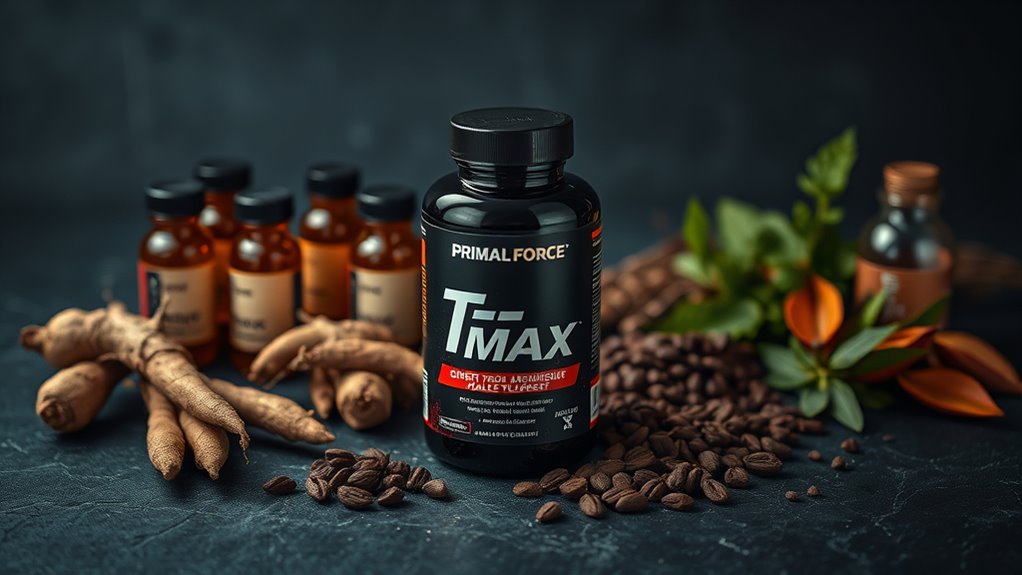
When you compare Primal Force T-Max with other male vigor supplements, the key question isn’t marketing claims—it’s whether the formula’s specific ingredients plausibly raise androgenic activity, improve sexual function through measurable pathways (e.g., nitric-oxide–mediated blood flow, androgen receptor signaling, or luteinizing-hormone support), and do so with an evidence-backed safety profile. You’ll want clinical studies and transparent ingredient sourcing, not proprietary fog.
Here’s how to compare mechanistically:
- Endocrine plausibility: Do ingredients target luteinizing-hormone or androgen receptor signaling, and at doses matching effect sizes?
- Vascular/NO pathway: Is there credible support for nitric-oxide–mediated perfusion rather than generic “circulation” language?
- Safety/biostatistics: Look for adverse-event rates, consistent endpoints, and quality-controlled manufacturing controls tied to ingredient sourcing and clinical studies.
If another product can’t show those links, don’t assume equivalence.
Common Questions
Is Primal Force T-Max Safe for Men With High Blood Pressure or Heart Conditions?
Primal Force T-Max isn’t clearly proven safe for men with high blood pressure or underlying heart conditions. Evidence on its exact ingredients and their dose-specific effects on blood pressure and heart health is limited. Mechanistically, stimulatory botanicals may raise sympathetic tone, worsen vascular resistance, or affect heart rate—potentially increasing risk in susceptible people. You should avoid it unless your clinician approves, especially if you use antihypertensives or have cardiac history.
Can I Combine Primal Force T-Max With Erectile Dysfunction Medications Safely?
Yes, but only with caution. You can’t assume safe combination: check safety precautions with a clinician first. Erectile dysfunction drugs (like PDE5 inhibitors) and testosterone-boosting supplements may shift blood pressure and affect nitric-oxide signaling, creating medication interactions risk. Biostatistically, evidence on product-specific effects is sparse; mechanistically, altered vasodilation could intensify hypotension or headaches. If you have heart disease or take nitrates/riociguat, don’t combine—ask your prescriber.
What Side Effects Are Most Commonly Reported With This Supplement?
Most commonly reported side effects include GI upset (nausea, stomach cramps, diarrhea), headache, mild dizziness, flushing, and sleep disruption. Evidence is limited because trials are often small/unspecified, so you’ll mostly see user experiences rather than biostatistically precise rates. Mechanistically, stimulatory ingredients and vascular effects could raise heart rate/irritate smooth muscle, while herbal compounds may affect hormone signaling, driving those GI and CNS symptoms. Stop use and consult a clinician if severe.
Does Primal Force T-Max Affect Testosterone Levels or Hormones on Labs?
Yes—available evidence doesn’t clearly show Primal Force T-Max consistently changes testosterone levels on labs. If it affects hormones, it’s usually via modest androgen support or improved hormonal balance rather than a direct endocrine push. Mechanistically, ingredient-dependent pathways may influence LH/testosterone signaling, but published, lab-confirmed human RCT data is limited. You should treat “testosterone boosting” claims as preliminary, and confirm with baseline follow-up bloodwork (total/free T, SHBG, LH). Consult your clinician.
How Long Does a Typical Bottle Last With Recommended Dosing?
With recommended dosing, a typical bottle usually lasts about 30–60 days, depending on serving size and your dosing frequency. Evidence-wise, most supplements’ label directions map capsules per bottle to days supply; mechanistically, the active ingredients don’t “cycle,” so longevity tracks consumption, not hormone response. If you follow label “servings per day,” you can estimate bottle longevity as (total servings ÷ daily servings), adjusting for missed doses.
Overall
Primal Force T-Max may *market* “sex root–powered” testosterone support, but the strongest takeaway is that supplement results are not guaranteed—especially when RCT evidence for meaningful androgen boosts is limited and botanical dose–response relationships are often indirect. If you choose to try it, treat it like an experiment: start with a clear baseline, track outcomes (libido, energy/fatigue, sleep quality, mood, recovery) with dates and simple scores, and give it enough time to judge real change rather than short-term effects.
Before you “optimize,” make safety part of your plan. If you have cardiovascular risk, elevated blood pressure, a history of hormone-sensitive conditions, or you’re on medications that could interact, consult your clinician and consider labs where appropriate. If you want, use your tracking to decide whether to continue, adjust, or stop—evidence beats vibes every time.
One thought on “Primal Force T-Max – Sex Root: Inside the Men’s Vitality and Performance Formula”