
If prostate health were a “signal” competing with everyday noise, it would be shaped by two major forces: inflammation and the way urinary resistance builds over time. That’s exactly why supplements marketed for prostate wellness—like Malkko Prostapure Advantage—tend to draw attention. The formula is presented as a targeted blend featuring ingredients such as zinc, saw palmetto, and beta-sitosterol, suggesting support for processes tied to androgen activity, oxidative stress, and urinary comfort.
But here’s the real question that matters before you trust the promise: what does the research actually show, and how confidently can you connect that evidence to this specific product? In this article, we’ll examine each ingredient’s proposed role, what outcomes have been supported in human studies, and whether the dosing and quality controls are transparent enough to assess effectiveness and safety.
Great Points
- Review Malkko Prostapure Advantage’s prostate-support claims versus actual clinical evidence and standardized, measurable outcomes.
- Verify label accuracy for daily dosages (mg/µg) and confirm ingredient transparency, including what “standardized” extracts contain.
- Demand batch-specific third-party testing COAs for active content, heavy metals, microbes, and solvent residues.
- Assess formula components like saw palmetto, pygeum, zinc, selenium, omega-3s, and lycopene for dose plausibility and synergy rationale.
- Check safety and interactions, especially with anticoagulants, metabolic drugs, liver conditions, and avoid self-treatment for cancer or elevated PSA.
What Malkko Prostapure Advantage Claims to Do
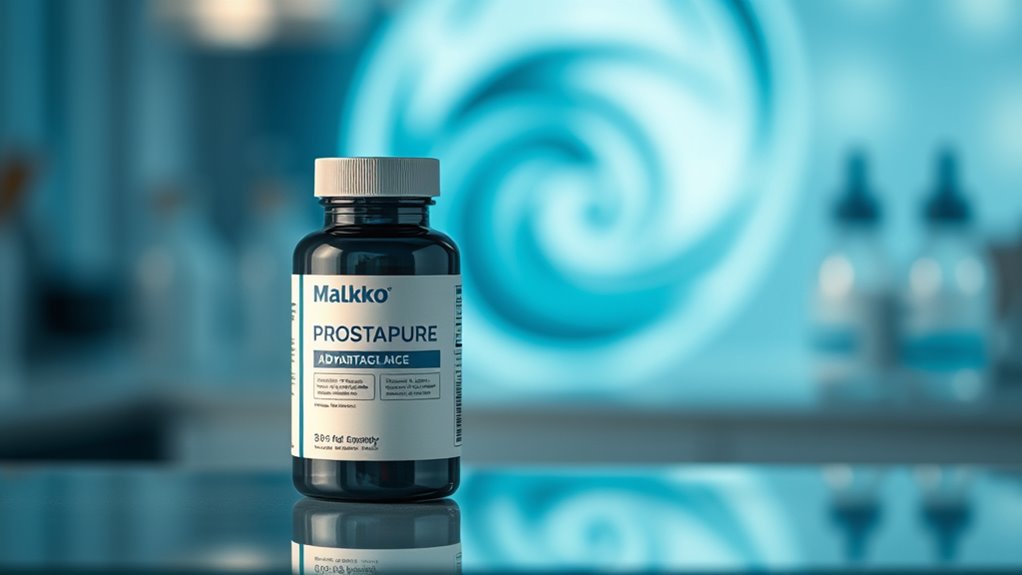
Malkko Prostapure Advantage is marketed as a prostate-focused supplement, and its central claims typically revolve around improving prostate health by supporting pathways linked to inflammation and urinary function. You’re told it may help reduce inflammatory signaling and thereby promote smoother urine flow, implying a clinically meaningful effect on lower urinary tract symptoms. When you evaluate these assertions, you should treat them as provisional: prostate myths often equate symptom relief with disease modification, and supplement misconceptions blur “support” with proven treatment. The claims are usually framed without specifying standardized endpoints, effect sizes, or rigorously designed randomized trials in your target population. Evidence-based scrutiny means you check whether any ingredient has human data for LUTS or inflammatory biomarkers, and whether dosing matches study conditions.
The Role of Prostate-Support Ingredients in Formulas
You’ll want to evaluate which prostate-supporting nutrients are included (e.g., zinc, selenium, omega-3 fatty acids) and whether the labeled doses align with evidence-based targets. In well-designed formulas, ingredient selection often aims for synergistic effects—such as combining anti-inflammatory and antioxidant pathways—to better support prostate tissue health than single-agent strategies. As you compare products, focus on substantiated ingredient blends, standardized raw materials, and clinical relevance of each component rather than broad “prostate support” claims.
Key Prostate-Supporting Nutrients
Designing prostate-support formulas starts with selecting nutrients and phytonutrients that have credible mechanistic and, when available, clinical support for targeting androgen signaling, inflammation, and oxidative stress. You’ll want evidence-aligned nutrient sources: selenium, zinc, omega-3 fatty acids, vitamin D, and lycopene, plus complementary antioxidants like vitamin E and vitamin C. These compounds influence NF-κB–mediated inflammatory pathways, modulate androgen receptor activity, and enhance cellular redox balance. Dietary considerations matter: you should account for baseline intake, absorption, and medication interactions (e.g., anticoagulants with vitamin E/omega-3). Here’s a quick evidence-to-function map:
| Nutrient | Primary prostate-relevant action |
|---|---|
| Selenium | Redox/immune modulation |
| Zinc | Enzyme and androgen regulation |
| Omega-3 | Eicosanoid shift, anti-inflammatory |
Synergistic Formula Ingredient Blend
A well-designed prostate-support formula doesn’t rely on one ingredient working in isolation; it uses a synergistic blend where each prostate-relevant nutrient targets a different node in the androgen–inflammation–oxidative-stress axis. You should evaluate how ingredient interactions affect pharmacodynamics: anti-inflammatory polyphenols can downregulate NF-κB signaling, while antioxidants like selenium or carotenoids reduce ROS-mediated epithelial damage. You then align this with androgen modulation pathways—e.g., botanicals with 5α-reductase–related activity—to limit DHT-driven prostatic growth signals. In clinical practice, synergy depends on ideal dosages, bioavailability, and co-administration timing. Too little may fail to reach threshold enzyme inhibition; too much can blunt complementary effects or raise adverse-event risk. Evidence increasingly supports multi-target formulations over single-agent approaches.
Malkko Prostapure Advantage Ingredient Highlights and Purpose
You’ll see that Malkko Prostapure’s key extracts are selected for distinct, evidence-informed roles in prostate-support pathways, including antioxidant and anti-inflammatory modulation. You’ll also note how the formula targets localized prostate wellness while aiming to improve bioavailability through ingredient design. Together, these components are formulated for synergistic effects and more consistent absorption, rather than relying on any single active ingredient.
Key Extracts And Their Roles
Malkko Prostapure’s prostate-support formula pairs standardized botanical and nutrient extracts with roles that map to known pathways in benign prostatic hyperplasia (BPH), aiming to influence inflammation signaling, androgen-related activity, and smooth-muscle tone. You’ll benefit most when herbal extracts are paired for nutrient synergy and backed by clinical studies; this is where ingredient sourcing and formulation transparency matter. Use consumer education to interpret dosage guidelines and health trends rather than chase single-ingredient claims. The table below links key extract categories to mechanistic targets, helping you evaluate evidence with appropriate context:
| Extract category | Primary role |
|---|---|
| Saw palmetto–like | Androgen modulation |
| Pygeum-like | Inflammatory signaling |
| Stinging nettle | DHT pathway support |
| Zinc cofactors | Enzymatic balance |
| Selenium | Oxidative tone control |
Targeted Support For Prostate
Targeted support for the prostate works best when specific extracts are paired to modulate the biological processes most consistently implicated in BPH—particularly androgen/DHT signaling, inflammatory cytokine activity, and smooth-muscle tone regulation. You can think of a targeted profile as an evidence-guided, mechanism-focused approach: downshifting excessive DHT pathway signaling, attenuating NF-κB–linked inflammatory cascades that sustain stromal/epithelial activation, and supporting regulation of adrenergic-dependent smooth-muscle tone to improve outlet function. In practice, you don’t rely on botanicals alone; you integrate lifestyle factors that modulate these same pathways, including maintaining healthy body composition, consistent physical activity, and dietary patterns that reduce chronic low-grade inflammation. That holistic approach helps align biochemical targets with real-world physiology.
Ingredient Synergy And Absorption
When you choose a prostate formula, synergy matters as much as the individual ingredients—because complementary mechanisms and improved bioavailability can better support the DHT/inflammation/smooth-muscle tone axes involved in BPH. In Malkko Prostapure, you benefit from natural synergy: nutrient interaction among phytochemicals and targeted cofactors can modulate shared pathways, rather than acting independently. You should also look at ingredient potency alongside absorption efficiency, since under-dosed actives won’t reach clinically meaningful plasma or tissue levels. Bioavailability factors—solubility, permeability, and first-pass metabolism—determine how much of each component survives digestion. Formulation integrity further protects sensitive compounds from degradation and maintains dose uniformity. When these bioavailability factors align with formulation integrity, your bioactive load increases, improving therapeutic plausibility. This is why nutrient interaction and absorption efficiency are key.
How Beta-Sitosterol Supports Prostate Wellness Goals
Beta-sitosterol, a plant-derived phytosterol, may support prostate wellness goals by modulating key pathways involved in inflammation and cellular signaling that contribute to benign prostatic enlargement. You get relevant beta sitosterol benefits through effects on inflammatory mediators and immune cell signaling, which can influence stromal-epithelial interactions in the prostate. In preclinical and translational studies, phytosterols can alter lipid raft composition and downstream receptor signaling, helping dampen pro-growth and pro-inflammatory cascades. You’re also likely to benefit from improved cholesterol homeostasis, since sterol competition can reduce intestinal cholesterol absorption, thereby affecting systemic sterol availability that may indirectly shape prostate health. Mechanistically, beta-sitosterol has been associated with reduced oxidative stress markers and normalization of cytokine profiles. For your prostate health strategy, these effects provide a plausible, pathway-based rationale.
Why Saw Palmetto Often Appears in Prostate Supplements
Saw palmetto is often included in prostate supplements because a substantial body of clinical and pharmacologic research suggests it can influence the androgen pathway and pelvic tissue signaling that drive lower urinary tract symptoms associated with benign prostatic hyperplasia (BPH). You’ll see it standardized for bioactive liposterolic extracts, which are thought to modulate 5-alpha-reductase activity and reduce downstream DHT availability in prostatic tissue. In trials of mild-to-moderate LUTS, extract dosing has been linked with improvements in urinary flow parameters and symptom scores, though effect sizes vary by study design and product standardization. From a mechanistic standpoint, you benefit by targeting pro-inflammatory signaling and smooth muscle contractility, both relevant to bladder outlet obstruction physiology. This is part of why saw palmetto benefits are repeatedly discussed in prostate health formulations.
What Zinc Contributes to Prostate Function

You rely on zinc for fundamental cellular functions, including enzyme activity and transcriptional regulation that influence epithelial and stromal homeostasis. Adequate zinc status is associated with maintenance of healthy prostate tissue architecture and antioxidant defenses, which may modulate tissue remodeling under inflammatory stress. Zinc also contributes to hormone balance by supporting androgen-related signaling pathways and regulating factors involved in prostatic growth and function.
Role Of Zinc In Cells
Zinc plays a central role in cellular biology that’s relevant to prostate function, largely because it acts as a catalytic and structural cofactor in numerous enzymes and transcription factors. When you support zinc absorption, you influence cellular function in androgen-responsive pathways and stabilize protein folds needed for normal secretory activity. Mechanistically, zinc modulates gene transcription, enzymatic redox reactions, and signaling cascades that determine how prostate cells respond to metabolic and inflammatory cues. Clinically, altered zinc status can shift inflammatory tone, so adequate zinc availability is often discussed in the context of immune support and prostate health.
- Cofactor for oxidoreductases and DNA-binding proteins
- Regulates transcriptional activity in prostate-relevant gene networks
- Influences antioxidant balance and stress-response signaling
- Supports immune signaling efficiency via zinc-dependent pathways
Supports Healthy Prostate Tissue
Beyond its broader cellular roles, zinc helps maintain healthy prostate tissue by supporting key processes that keep prostate cells functional and resilient. You rely on zinc-dependent signaling to support antioxidant defense, limiting oxidative damage to lipids and proteins within prostate tissue. Zinc also stabilizes cellular membranes and transcriptional regulators, helping maintain normal proliferation and controlled apoptosis—critical for tissue homeostasis during healthy aging. At the enzymatic level, zinc serves as a catalytic cofactor for DNA/RNA polymerases and repair pathways, so damaged macromolecules can be corrected before they trigger dysfunctional growth. If you support adequate zinc status, you help preserve epithelial integrity and microenvironment stability, which may reduce susceptibility of prostate tissue to stress-related decline.
Helps Maintain Hormone Balance
Adequate zinc status supports prostate function partly by helping regulate androgen signaling pathways that influence proliferation, differentiation, and maintenance of prostatic tissue homeostasis. You can view zinc as a micronutrient that modulates hormone regulation at the receptor and intracellular signaling level. Mechanistically, zinc participates in testicular/androgen-related homeostasis and may protect prostatic cells from oxidative stress that can disrupt local androgen action.
- Maintains androgen receptor activity to support stable tissue turnover
- Supports hormone regulation through zinc-dependent transcriptional signaling
- Helps buffer redox imbalance that alters steroid metabolism
- Aligns with your wellness journey by supporting consistent biochemical milieu
The Benefits of Lycopene for Prostate Health Support
Lycopene—a carotenoid found at high levels in tomatoes and processed tomato products—has been studied for prostate health support because it can act as a potent antioxidant and modulate pathways linked to inflammation and oxidative stress. In prostate research, higher lycopene status correlates with lower markers of lipid peroxidation and improved redox balance, which may help protect prostate tissue. As you evaluate lycopene sources, prioritize tomato-based foods or standardized extracts with better bioavailability; heat processing and oil-based delivery can enhance absorption and plasma levels. Mechanistically, lycopene may influence IGF signaling and androgen-responsive processes, potentially affecting proliferative pathways. While human trials vary in endpoints, controlled dietary interventions support a biologically plausible benefit for maintaining prostate health support rather than treating established disease.
How Antioxidants May Help With Inflammation Balance

You can think of antioxidants as a way to counter oxidative stress, which is linked to NF-κB–mediated inflammatory signaling. By modulating redox-sensitive pathways, they may help shift cytokine balance and reduce pro-inflammatory transcriptional activity. Through this mechanism, antioxidant support may help protect prostate tissue integrity and support a more stable inflammation profile.
Antioxidant Support For Oxidative Stress
Oxidative stress arises when reactive oxygen species (ROS) generation outpaces antioxidant defenses, and this imbalance can activate redox-sensitive pathways that upregulate inflammatory signaling. When you’re exposed to sustained ROS, antioxidant systems like SOD, catalase, and glutathione peroxidase can become functionally overwhelmed, leading to oxidative stress and cellular damage in prostate tissue. By supporting antioxidant capacity, you may reduce lipid peroxidation, protein oxidation, and DNA strand breaks, thereby lowering downstream redox burden. This approach is consistent with mechanistic findings that antioxidant buffering can attenuate oxidative intermediates without directly modulating inflammatory receptors.
- Scavenge ROS to restore redox homeostasis
- Limit membrane lipid peroxidation
- Preserve mitochondrial function under stress
- Reduce oxidative biomarkers associated with cellular damage
Balancing Inflammation Signaling Pathways
When oxidative stress persists, redox-sensitive signaling pathways can skew toward pro-inflammatory transcription programs—largely through ROS-mediated activation of NF-κB, MAPK cascades, and inflammasome-linked mechanisms. If you’re aiming for inflammation modulation, you should track how antioxidants influence these signaling pathways rather than just lowering bulk ROS. In clinical models, polyphenols, thiol donors, and vitamin-derived redox systems can reduce ROS-dependent IKK/NF-κB signaling, dampening cytokine outputs such as TNF-α and IL-6. They may also shift inflammasome activity by limiting mitochondrial ROS and NLRP3 priming, thereby reducing caspase-1 cleavage and IL-1β release. You can view the goal as restoring redox tone, rebalancing kinase phosphorylation thresholds, and promoting resolution-biased mediator profiles without immunosuppression.
Protecting Prostate Tissue Health
Protecting prostate tissue health depends partly on keeping inflammatory signaling responsive rather than chronically activated—because persistent ROS-driven transcription can sustain NF-κB/MAPK cytokine output and promote inflammasome priming. As antioxidant capacity buffers ROS, you can support inflammation balance by lowering redox-sensitive cytokine transcription, which may help preserve epithelial integrity and downstream tissue function. In practice, you’re aiming for translational health benefits: reduced oxidative stress markers, normalized macrophage activation profiles, and steadier inflammasome thresholds. Because inflammation can impair local microcirculation, it may also affect nutrient absorption within prostatic tissue. When you choose antioxidants, prioritize supplement safety: verify dosing, bioavailability, and avoid pro-oxidant effects at high concentrations, especially in combined regimens.
- Target redox control, not immune suppression
- Monitor NF-κB/MAPK–linked cytokines
- Support nutrient uptake and perfusion
- Use clinically tested, safe antioxidant doses
Checking the Supplement Facts for Dosage Consistency
Before you buy or start any prostate-focused supplement, check the Supplement Facts panel to confirm that the label dosage matches what you’re trying to achieve. Start by matching serving size to your intended daily regimen; otherwise, unit conversions can create hidden underdosing. Verify dosage accuracy by comparing the listed milligrams or micrograms per serving for each active ingredient, then scale to the number of servings you’ll take. Pay attention to standardized claims: if a blend is proprietary, you may see totals without component-level amounts, which reduces dosage predictability. Look for ingredient transparency—clear identities, consistent forms (e.g., extracts vs. raw compounds), and stated serving frequency. Also confirm whether the product provides one-time or split dosing, since timing affects exposure consistency.
Third-Party Testing, Quality Standards, and Verification

Third-party testing is one of the most reliable ways to verify that a prostate-focused supplement actually contains what the label claims, at the stated potency, and with appropriate quality controls throughout manufacturing. When you look for third party verification, you’re checking independent lab results against specifications for identity, assay, purity, and contaminant risk. This supports quality assurance by confirming that raw materials, in-process lots, and finished products meet predefined acceptance criteria, reducing lot-to-lot variability.
- Independent COAs with batch-specific testing for active ingredients
- Heavy metals, microbes, and solvent residues screened to compliance limits
- Stability testing to verify potency over shelf life
- Documented GMP controls, including sampling, chain-of-custody, and corrective actions
How to Fit Malkko Prostapure Advantage Into Your Routine
After you’ve confirmed through third-party documentation that the product meets label potency and contaminant limits, you can focus on real-world use—so you’re getting consistent exposure to the ingredients over time.
Start by assigning a specific spot in your morning routine. Take Prostapure Advantage with water, aligning dosage timing to meals and your dietary considerations to reduce GI variability. Track hydration habits; aim for steady fluid intake across the day rather than bolusing. In your evening routine, maintain the same schedule daily, especially if you practice supplement stacking—avoid concurrent dosing with high-mineral supplements that could interfere with absorption. If you use multiple products, separate by at least 2 hours unless labels specify otherwise. Finally, integrate exercise balance: moderate activity supports general prostate health markers, but don’t change intensity abruptly when beginning.
What to Expect After Starting Prostapure Advantage
When you start Prostapure Advantage, you’ll typically notice that effects—if they occur—are gradual rather than immediate, because consistent daily intake is required to maintain steady exposure to the product’s active ingredients. In practice, your prostate health markers (e.g., urinary comfort and symptom scoring) may shift over several weeks, aligning with the pharmacologic timeline of dietary-supplement co-factors rather than acute drug effects. During early use, you should track supplement expectations: stability, not spikes.
- Expect no guaranteed changes day-to-day; trends matter more than single readings.
- Monitor urinary comfort using a consistent scale to reduce measurement noise.
- Maintain the same dosing window to limit variability in exposure.
- Report persistent adverse GI or skin symptoms and discontinue if needed.
Who Should Be Careful With Prostate Supplements
Who should be especially cautious with prostate supplements like Prostapure Advantage? If you’re managing prostate cancer, advanced BPH, or unexplained PSA elevation, you should avoid “self-treating” and discuss any supplement safety with your clinician first. Also be careful if you take anticoagulants, antiplatelets, or multiple metabolic medications—herbals and concentrates can alter cytochrome activity and bleeding risk. You should use extra caution with bleeding disorders, upcoming surgery, or significant liver disease due to limited human pharmacokinetics.
| Risk group | Why | Action |
|---|---|---|
| Cancer/↑PSA | Potential masking of progression | Medical review |
| Anticoagulants | Drug–nutrient interactions | Separate dosing/monitor |
| Liver disease | Impaired metabolism | Avoid unless supervised |
| Surgery soon | Periop bleeding | Stop pre-op |
Prioritize prostate health and evidence-based guidance over proprietary blends.
Comparing Malkko Prostapure Advantage With Similar Options
When you’re comparing Malkko Prostapure Advantage to similar prostate-support products, start by verifying the exact ingredient list, standardized doses, and any third-party testing (e.g., USP/NSF or independent contaminant screens). For prostate health, you’re really comparing bioactive profiles: formulation standardization, dose constancy batch-to-batch, and evidence-grade endpoints such as PSA kinetics, symptom indices, or biomarker shifts. Next, map each product’s actives (e.g., saw palmetto, lycopene, zinc, selenium, beta-sitosterol) to clinically plausible dosing ranges and review whether claims are supported by human trials rather than extrapolated in vitro data. Also check for excipient loads and allergen relevance.
- Standardization and verified potency
- Dose alignment with studied ranges
- Independent contaminants/identity testing
- Comparable study population endpoints
Common Label Claims to Question Before You Buy?
Which label claims should you treat as “marketing first” rather than evidence-based guidance when you’re shopping for prostate-support supplements? You should scrutinize vague promises like “clinically proven” without study design, dosage, and comparator details. Be cautious when “prostate detox,” “hormone balancing,” or “BPH reversal” are asserted; these exceed typical phytochemical evidence and may not reflect controlled trial outcomes. Watch for missing standardized extract data: percent active constituents, lot-specific testing, and stability information. You also want clear label transparency—complete Supplement Facts, serving size, and amounts per capsule—rather than proprietary blends that prevent dose verification. Finally, validate ingredient sourcing and manufacturing controls (GMP, third-party certificates, contaminant screening). If these elements are absent, your risk-benefit assessment should default to uncertainty.
Common Questions
Is Malkko Prostapure Advantage Safe for Men With Prostate Cancer History?
Yes, but you can’t assume it’s safe without medical review. If you have a prostate cancer history, you should discuss Malkko Prostapure Advantage with your urologist/oncologist due to potential safety concerns and unknown interactions with cancer treatment (e.g., androgen deprivation, radiation, chemotherapy). Evidence for specific herbal “prostate wellness” formulas is often limited and variable in quality. Use caution, request ingredient transparency, and monitor PSA and symptoms.
How Soon Might I Notice Prostate-Related Symptom Changes After Starting?
You might notice symptom changes within 2–6 weeks, but some men see little shift until 8–12 weeks. There’s no guaranteed timing; your symptom timeline depends on baseline severity, adherence, and medication interactions. Clinically, improvement—if it occurs—typically involves slower urinary symptoms or reduced discomfort rather than rapid cures. Because individual variations are significant, track PSA/urinary scores and report worsening promptly, especially with fever, hematuria, or acute retention.
Can I Take Malkko Prostapure Advantage With Tamsulosin or Finasteride?
Yes, you can generally take Malkko Prostapure Advantage with tamsulosin or finasteride, but you should confirm your specific dosage recommendations with your clinician. Evidence on supplement–drug interactions is limited, so safety hinges on your full medication list. Tamsulosin and finasteride have distinct mechanisms, and no robust clinical trials prove incompatibility. Be cautious about bleeding risk and monitor symptoms. User testimonials are mixed; they aren’t substitute for lab follow‑up.
Does Malkko Prostapure Advantage Affect PSA Blood Test Results?
Yes, Malkko Prostapure Advantage could affect PSA blood test results, mostly indirectly, through PSA fluctuations. Example: if you start the supplement during a prostatitis flare, the PSA may rise transiently, then fall as inflammation settles—making it look like a supplement effect. In clinical practice, supplement interactions are possible, especially with ingredients that may alter inflammation or hormones. To be safe, keep timing consistent and recheck PSA after 6–8 weeks.
What Side Effects or Interactions Are Most Commonly Reported by Users?
Most commonly reported side effects are mild GI upset (nausea, bloating) and occasional constipation or diarrhea; some user reviews also mention headache, dizziness, or skin flushing. Clinically, these products may contain botanicals or micronutrients that can interact with anticoagulants/antiplatelets, antihypertensives, and diabetes meds, but interaction data is limited. You should review labels, check with your clinician if you’re on medications, and monitor for PSA-related urinary symptoms.
Overall
Before you add Malkko Prostapure Advantage to your routine, take a moment to verify what you’re actually buying and how it fits your health profile. Look for third-party testing, clear labeling, and clinically grounded dosing—especially for key ingredients like zinc, beta-sitosterol, and saw palmetto. If you can’t find strong, transparent evidence for these specific amounts, treat the claims as supportive at best and avoid assuming results are guaranteed. Use the label precisely, check what “supports” means versus what it can or can’t treat, and don’t rely on marketing language alone.
Next, make a proactive plan: review any current medications (including those for urinary symptoms, blood pressure, or hormone-related conditions), ask about potential interactions, and confirm whether a prostate supplement is appropriate for you. If you experience worsening urinary symptoms, pain, blood in urine, or rapid changes, prioritize medical evaluation rather than self-treating. Take control of your next step today—verify, discuss, and choose with confidence.
3 thoughts on “Malkko Prostapure Advantage: Exploring the Formula Behind Prostate Wellness”