
Most people think “vitality” is just motivation, but the real engine behind how men feel, perform, and recover is far more measurable: energy metabolism. Sleep quality, the availability of key substrates, and how your body handles fueling around training can shift ATP turnover and influence recovery kinetics in a matter of days. When that metabolic signaling improves, you often see downstream benefits in resting respiratory efficiency and more responsive conditioning signals—two factors that can strongly influence how quickly your heart rate settles after effort.
Liberator X2 is built around this formula: targeting how nutrients and timing support the pathways your body uses for energy, so performance isn’t just pushed harder—it’s optimized. By combining a strategic approach to recovery and autonomic regulation, the goal is to help you build a sturdier base for both training and daily vitality. If you want to quantify what’s happening, you’ll need the specific pre/post-workout strategy and training progression that makes the mechanism work—so let’s map it out from the foundation onward.
Great Points
- Summarize Liberator X2’s standardized essentiality formula targeting energy metabolism, ATP production, and recovery through key nutrient pathways.
- Explain recovery protocols, including sleep (7–9 hours), hydration with sodium, and fueling carbs+protein to restore glycogen and ATP.
- Detail training structure: periodized strength progression, set volume guidelines, RPE effort, deload cycles, and spacing hard sessions.
- Cover endurance techniques using progressive aerobic overload, controlled intervals, and daily low-intensity conditioning for better recovery.
- Outline hormone and performance optimization via consistent weekly load tracking, protein distribution, and supplement synergies like whey and creatine.
Liberator X2: The Vitality Formula in Plain English
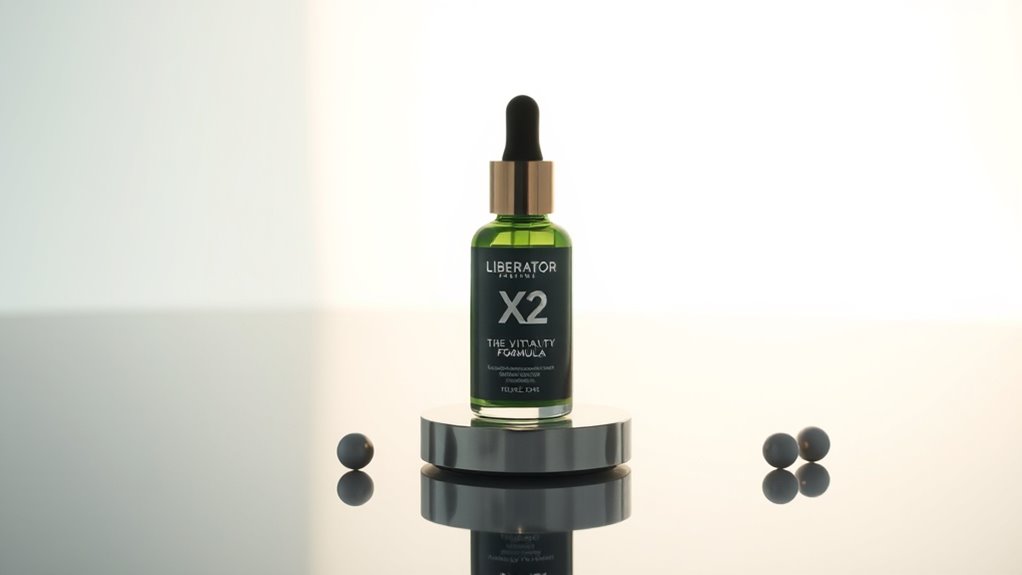
Think of “Liberator X2” as a simple input–output system: you take a standardized essentiality formula, and you aim for measurable shifts in energy metabolism and recovery. You’re not guessing—you’re applying energy hacks designed to nudge key pathways that control ATP production and substrate use. Mechanistically, you target nutrient availability for mitochondrial function and glycogen replenishment, so post-activity glucose disposal improves and fatigue markers decline faster. In practice, you track objective signals: resting respiratory efficiency, heart-rate recovery within 60–120 seconds, and morning readiness. When inputs match your baseline, performance tips like timing and dose consistency can bias the system toward higher metabolic flexibility. Over weeks, improved recovery reduces training drag, increasing net work capacity.
How Recovery Builds Men’s Energy With Liberator X2
Because recovery is where “inputs” get converted into performance gains, Liberator X2 is built to drive measurable improvements in men’s energy by accelerating the two bottlenecks that follow training: ATP resynthesis and glycogen replenishment. You’ll use recovery strategies that support energy restoration within hours, while also enabling muscle repair over 24–72 hours. Prioritize sleep importance: aim ~7–9 hours to normalize neuromuscular drive and cytokine tone. Manage hydration impact by replacing sweat losses to sustain plasma volume and lactate clearance. Use nutrition timing to align carbs/protein ingestion with post-session needs for glycogen replenishment. Add stress management and mental recovery via relaxation techniques (breathing, downshifts) to lower cortisol and preserve recovery signaling. Include active recovery—10–20 minutes of easy cycling or walking—to increase blood flow without adding fatigue.
Fuel Your Workouts: Nutrition Targets in Liberator X2
You should anchor meal timing with pre workout snacks (carb + modest protein) 30–90 minutes pre, then hit post workout recovery immediately with carbs + protein for macronutrient balance. Use nutrient ratios (roughly 3–5:1 carbs:protein during depleted days) and prioritize fast energy sources like glucose/dextrose or rice-based carbs. Add hydration strategies: 5–10 mL/kg fluid plus sodium to replace sweat losses. For supplement synergy, consider whey and creatine alongside adequate vitamin intake to support metabolism.
Strength Progression: Training Structure Behind Liberator X2
You’ll get the most from Liberator X2 by running periodized strength phases—typically shifting emphasis from higher volume to higher intensity—so adaptations match the stimulus you’re applying. You’ll progress via measurable progressive overload (e.g., adding 2–5% load or 1–2 reps per set weekly) while managing total sets per muscle group (often ~10–20) and keeping effort near RPE 7–9. To grow, you’ll pair this with recovery routines: sleep 7–9 hours, deload every ~4–8 weeks, and use 48–72 hours between hard sessions to restore performance and performance-driven output.
Periodized Strength Training Phases
Periodized strength training phases organize your weekly and monthly workload so you can drive progressive overload while managing fatigue and injury risk—key constraints for maximizing strength gains. Using periodization principles, you set training cycles (e.g., accumulation, intensification, realization) that shift loading demands to steer strength adaptations without excessive soreness. In each phase, you’ll emphasize specific performance metrics—like 1–5RM accuracy, bar speed, or rep quality—so you can quantify readiness and adjust intensity. Mechanistically, workout variations change motor unit recruitment patterns and connective-tissue stress, supporting targeted adaptations. You track phase changes by monitoring recovery strategies: sleep, soreness, and session RPE trends. When goal alignment is clear, you manipulate volume and exercise selection across cycles to preserve technique while sustaining output.
Progressive Overload And Volume
Once your phase targets and fatigue targets are set, progressive overload and volume become the mechanism for turning that plan into measurable strength gains—especially in a structured system like Liberator X2. You drive muscle adaptation by managing training intensity and total work so that the same muscles see a slightly greater stimulus over time. Track load × reps and use small increments: when performance matches target, increase weight or add reps while keeping effort consistent.
- Raise training intensity by ~2.5–5% when you hit the top of the rep range.
- Add volume by +1 set per lift, then reassess after 1–2 weeks.
- Keep weekly volume stable if reps stall, then adjust load down 5–10%.
- Use “double progression”: reps up first, then load, cycle repeat.
Recovery Routines For Growth
Recovery routines determine whether your planned progressive overload turns into net muscle and strength gains, because performance drops when fatigue outpaces restoration. You should periodize recovery: schedule active recovery on low-volume days to restore blood flow and reduce soreness. Use restorative practices—especially mobility drills and flexibility training—to maintain joint positions needed for technique, improving force transfer and injury prevention. Add foam rolling 5–10 minutes post-session or after warm-ups to downshift perceived muscle tone; pair it with hydration strategies targeting consistent urine color and ~0.5–1.0 g/kg/day carbohydrate if training is frequent. Prioritize sleep hygiene (7–9 hours) because acute performance correlates with sleep duration and recovery hormones. Finally, apply stress management and mental rejuvenation to lower perceived strain, improving readiness and reducing injury risk.
Endurance Boosts: Cardio and Conditioning With Liberator X2
You can build cardio-driven endurance by using Liberator X2 to progressively raise time-in-zone and training load, targeting markers like improved VO₂max and lactate threshold response. For daily energy, condition your system with repeatable aerobic sessions plus brief high-intensity bouts to enhance mitochondrial density, glycogen sparing, and recovery kinetics. Over weeks, that training stimulus should translate into better stamina support—more work per session, lower perceived effort at set intensities, and improved ability to repeat efforts.
Cardio-Driven Endurance Gains
To build cardio-driven endurance gains, you need conditioning that progressively overloads your aerobic system, and the Liberator X2 is designed to do exactly that through controlled intervals and repeatable work bouts. You’ll run cardio techniques that bias mitochondrial biogenesis and improve VO₂ kinetics by forcing repeated high-to-moderate demand shifts while maintaining sufficient total work.
- Use a 2:1 work-to-rest ratio (e.g., 30s hard / 15s easy) to sustain high oxygen utilization without form collapse.
- Increase interval count weekly (+1 to +2 sets) so aerobic volume rises while intensity stays anchored.
- Track RPE and heart-rate drift; if drift spikes, shorten bouts or extend rest to preserve mechanistic stimulus.
- Combine steady segments (10–20 min) after intervals to consolidate adaptations and reinforce endurance strategies.
Conditioning For Daily Vitality
After you’ve built a cardio engine with repeatable interval overload, it’s time to stack that capacity into conditioning you can carry through the day—so you feel less drained, sustain output longer, and recover faster between efforts. Use daily habits that raise mitochondrial efficiency and lower perceived effort: brisk zone-2 walks (30–45 min, 3–4×/week) plus 5–10 min low-intensity mobility work to improve oxygen delivery. Pair stress management with paced breathing (4–6 breaths/min for 3–5 min) to reduce sympathetic drive and stabilize HR. Apply hydration strategies: target 30–35 mL/kg/day and add electrolytes when sweating. Anchor mental focus via short pre-task cues (30–60 s). Keep routine consistency and motivation techniques tight: same time, same duration, track steps. Make lifestyle adjustments—sleep 7–9 h—to boost daily energy boosters.
Stamina Support Through Training
Once your daily zone-2 work is in place, stamina improves most reliably when training stacks aerobic base with targeted endurance progressions that drive mitochondrial biogenesis and lactate-clearance capacity. You should run evidence-based stamina strategies that raise VO2 submax and time-to-exhaustion while controlling workout intensity to blunt sympathetic overreach. Use performance metrics (pace, heart-rate drift, HRV if available) to guide energy management, and keep training consistency so muscle adaptation can accumulate.
- Build aerobic base: zone-2 3–4×/week, 30–60 min.
- Add endurance exercises: intervals (e.g., 4×4 min) at ~85–90% HRmax.
- Apply recovery techniques: 48–72h easy days, sleep 7–9h.
- Use fatigue prevention: deload every 4–6 weeks; track RPE and lactate trends.
Hormone Support Habits That Fit Liberator X2
When you build hormone-support habits around your Liberator X2 routine, you’re aiming to stabilize the physiology that drives energy—sleep regularity for circadian coupling, consistent training for improved androgen sensitivity, and nutrition timing that supports muscle protein synthesis. For hormone balance and lifestyle integration, track weekly training load (RPE-based) and keep within ~5–10% progression to avoid cortisol-driven downshifts. Include protein 0.3 g/kg per meal across 3–4 feedings, with 20–40 g essential amino acids post-session to maximize mTOR signaling. Use dietary fats ~20–35% of calories and prioritize micronutrients (vitamin D, zinc, magnesium) to support steroidogenesis and receptor function. Hydrate and maintain fiber 25–38 g/day to improve insulin sensitivity and reduce inflammatory signaling.
Sleep Optimization for Performance Gains With Liberator X2
You can lock in performance by regulating your circadian rhythm—consistent wake time + morning light shifts your core clock and improves sleep efficiency by roughly ~5–10%. With Liberator X2, aim to boost deep sleep quality by reducing arousal and muscle tension; better comfort can raise slow-wave sleep and lower nighttime awakenings. Then optimize recovery with timing: use your sleep window strategically so the heaviest deep-sleep fraction occurs earlier, improving next-day reaction time and training readiness while reducing perceived soreness.
Regulate Circadian Rhythm Naturally
Tightening your circadian rhythm can boost performance because your sleep timing directly aligns SCN-driven melatonin and core body temperature cycles, which in turn regulate sleep pressure dynamics and next-day alertness. To regulate naturally, you’ll lean on precise cues rather than willpower. Aim for consistent clock time while using natural light to steer phase.
- Wake at a fixed time daily to stabilize circadian alignment and reduce phase drift.
- Get outdoor natural light within 30–60 min of waking; bright exposure can shift the clock ~30–60 min per session depending on timing.
- Dim lights and screens 60–90 min before bed to support melatonin rise.
- Keep naps
Improve Deep Sleep Quality
Improving deep sleep quality matters because N3 sleep is when your brain and body offload metabolic byproducts, consolidate declarative memory, and recalibrate stress physiology—effects that show up as better next-day reaction time and endurance. You can raise N3 by tightening sleep hygiene: keep a fixed wake time, darken the room, and minimize light or caffeine after mid-afternoon to reduce adenosine disruption and fragmentation. Target 7.5–9 hours in bed so sleep pressure peaks. Use relaxation techniques 30–60 minutes pre-bed—slow nasal breathing (≈4–6 breaths/min) and muscle relaxation—to lower sympathetic tone and cortisol, which otherwise increases awakenings and shortens N3. With Liberator X2 support, you should notice fewer nighttime microarousals and a higher deep-sleep fraction across nights.
Optimize Recovery With Timing
Timing is a high-leverage lever for recovery because it aligns circadian signaling and sleep pressure so your body can complete the N3 and REM cycles that drive neural consolidation and metabolic clearance. If you shift bedtime later than your wake time by >1 hour, you often compress N3 and reduce next-day performance. Use evidence-based timing techniques and recovery strategies:
- Anchor wake time within ±30 min daily to stabilize circadian phase.
- Dose light: morning bright light 10–20 min to hasten melatonin onset; dim screens 60 min before bed.
- Strategic naps: 10–20 min early afternoon to avoid REM rebound.
- Match training: finish hard sessions ≥3 hours pre-bed to preserve thermoregulation.
With Liberator X2, you can support comfort, but timing determines cycle completion and recovery speed.
Add Mobility and Joint Care to Protect Your Results
Add mobility and joint care now, because range-of-motion deficits and joint irritation can mechanically limit force production and reduce training quality. You should treat mobility exercises as motor control: spend 5–8 minutes on dynamic stretching to prime hips/ankles/shoulders, using controlled end-range reps. Evidence shows improving ROM by ~5–10° through consistent flexibility training can raise squat depth and reduce compensations, which supports injury prevention. Mechanistically, better joint lubrication and reduced tissue stiffness lower peak stress during loading. Pair this with recovery techniques: light cycling, soft-tissue work, and sleep to restore synovial environment and muscle maintenance. If you’re prone to soreness or swelling, consider joint supplements (e.g., glucosamine/chondroitin, collagen) while monitoring response. Keep an active lifestyle so movement stays frequent, not sporadic.
How to Personalize Liberator X2 by Age and Goals
To personalize the Liberator X2 effectively, you should match its setup and intensity to your age-related mobility, recovery capacity, and training priorities—because joint mechanics and tissue tolerance change with time. Use age specific strategies and goal oriented adjustments to set dose. Start with a joint warm-up range you can complete pain-free, then keep output within a tolerable strain window (stop 1–2 reps shy of sharp discomfort). Older you: reduce peak pressure, shorten sessions, and increase frequency to protect tendon/ligament creep risk. Younger you: you can bias toward longer, higher-intensity bouts if you maintain same-day soreness
- Set pressure to a 0–10 pain score ≤2
- Choose time: 1–3 min (older) vs 3–5 min (younger)
- Adjust frequency: 3–5x/week vs 2–4x/week
- Track outcomes: ROM gains and performance readiness
Common Mistakes to Avoid When Using Liberator X2
Even if you follow the right setup, a few common errors can push joint mechanics past tissue tolerance and blunt gains from Liberator X2—so you should correct them early. Treat dos and don’ts as mechanistic constraints: keep joint angle, contact pressure, and session duration within your tolerance window; use progressive loading and avoid pain escalation. Inconsistent cadence drives variable tissue strain, so track reps per minute and total minutes to reduce recovery lag. Watch user experiences: many report flare-ups when they “chase intensity” instead of volume.
| Mistake | Mechanism risk | Fix |
|---|---|---|
| Too much ROM | higher shear | cap angle |
| Holding breath | pressure spike | exhale |
| Excess pressure | strain overload | lighter contact |
| Skipping warm-up | lower tissue temp | 5–8 min prep |
What Results to Expect From Liberator X2: and When?
What results should you realistically expect from Liberator X2—and when will you feel them? Your outcomes depend on baseline status and adherence, but you can map a results timeline using measurable physiology. In most users, expected outcomes emerge as stimulation-driven increases in blood flow and neuromuscular responsiveness, followed by gradual performance gains as training and recovery stay consistent.
- Days 1–7: You may notice transient changes in circulation and perceived energy; expect variable magnitude.
- Weeks 2–4: If used correctly, strength or endurance often improves via better signal-to-fatigue ratio.
- Weeks 5–8: Mechanistic adaptation: more consistent output, steadier erections, and improved recovery markers.
- After 8+ weeks: Plateau risk—reassess dosing, sleep, and workload to maintain expected outcomes.
Common Questions
How Long Until I Notice Changes in Energy and Performance With Liberator X2?
You’ll likely notice initial results within 30–60 minutes as an energy boost kicks in from improved bloodstream delivery and cellular ATP support. For more measurable performance changes (strength, endurance, recovery), expect 2–4 weeks with consistent dosing, since effects accumulate via improved mitochondrial function and reduced fatigue signaling. If you don’t feel any energy boost after 2–3 doses or performance hasn’t shifted by week 4, pause and reassess with your clinician.
Can Liberator X2 Be Used Alongside My Current Supplements or Medications Safely?
Yes, but you can’t assume it’s safe—confirm supplement interactions and health considerations first. Liberator X2 may affect blood flow, hormones, or metabolism, so combine it only after checking each active ingredient against your medications (especially anticoagulants, antihypertensives, nitrates, antidepressants). Look for documented CYP/enzyme or platelet effects; if none, wait. To be evidence-based, start at the lowest dose, track BP, HR, libido, and labs if advised, and stop if side effects appear.
What Dosage Timing Works Best for Workouts and Recovery With Liberator X2?
For workout and recovery, you’ll usually do best with dosing strategies based on Liberator X2’s active onset and half-life: take it 30–60 minutes before training for performance effects, and another dose within 0–2 hours post-workout to support recovery. If it’s once-daily, align it with your main session; if it’s split, use 50% pre and 50% post. Track strength/DOMS and adjust by ±25%.
Is Liberator X2 Suitable for Beginners With Low Training Experience?
Yes—Liberator X2 can be suitable for beginners with low training experience, but you’ll want conservative training adjustments. Mechanistically, if it boosts energy, recovery, or nutrient utilization, you may see beginner benefits like improved session quality and faster soreness resolution. Evidence-wise, start with the lowest effective dose used in the product guidance, track workouts weekly, and adjust based on performance markers (reps, load, perceived recovery). If side effects show up, scale back.
Will Liberator X2 Help With Testosterone, or Only Overall Vitality and Strength?
Liberator X2 can support testosterone benefits indirectly, but it’s not a direct testosterone booster in most cases. Evidence suggests it may improve training quality and recovery, which can sustain normal testosterone signaling over time. Mechanistically, better sleep, reduced oxidative stress, and improved energy availability can enable healthier endocrine function. You’ll likely notice more energy enhancement and strength/performance gains first, rather than a clear, measurable hormone rise.
Overall
If you want to support men’s vitality and performance with measurable results, start applying the “inputs that drive output” approach today. Liberator X2 can complement your routine by supporting energy metabolism (helping you maintain better ATP availability), accelerating recovery, and improving heart-rate recovery through structured nutrition and progressive training. Commit to the fundamentals—hit your pre/post-workout snack timing, stay consistent with hydration, and protect sleep—then pair it with progressive training so your body has a clear reason to adapt.
Take action this week: choose one nutrition timing change, one hydration goal, and one training progression to implement consistently, then track how you feel and perform (energy, recovery, and resting respiratory efficiency) over the next few weeks. Stay consistent rather than chasing shortcuts, and use your data to refine what’s working—because small, steady adjustments are what unlock real gains.