
Training hard is only half the equation—how you fuel, recover, and support your muscles can make the difference between feeling strong in the gym and dragging later. GForce 5 is designed specifically for men who want smarter performance support, using a targeted blend of timed carbs and protein, key electrolytes, and creatine to help manage energy, improve recovery, and fuel growth when it matters most.
In this article, you’ll take a closer look at how GForce 5 works, what dosing timing should look like around your workouts, and how the formula is meant to fit into a complete training plan. You’ll also get a clear sense of who it’s best suited for and the important safety considerations to keep in mind before stacking it with your current routine.
Great Points
- GForce 5 focuses on fueling, recovery, and training support using measurable intent around workout demands.
- Use it 30–60 minutes before key sessions like intervals, race-pace repeats, or strength sets, not recovery days.
- The formula targets glycogen availability, electrolyte balance, and creatine-based high-intensity performance support.
- It supports muscle repair signaling with protein/amino acids alongside post-workout recovery nutrition practices.
- Track performance across 2–4 sessions and adjust timing or dosing to refine results while controlling variables.
What “Men’s Performance Support” Should Do
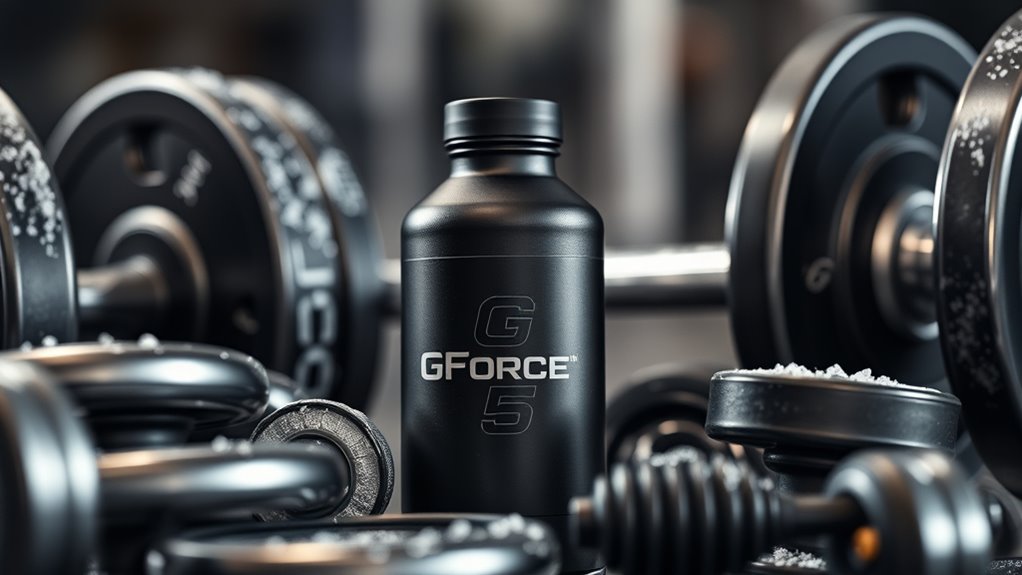
To perform at your best, your “Men’s Performance Support” system needs to cover the basics with measurable intent—fuelling, recovery, and training support—rather than relying on guesswork. You should use dosing-precise inputs to drive performance enhancement: carbohydrate timing for stable energy levels, protein distribution across the day for recovery strategies, and sleep/cooldown protocols to protect tissue. For muscle endurance, you’ll match training load with adequate glycogen restoration and electrolyte consistency. Prioritize mental focus with pre-training routines and caffeine/therapeutic aids only within established ranges to avoid swings in reaction time. Maintain nutritional balance through calorie targets, fiber, and micronutrients, not “clean eating” myths. Finally, improve training efficiency by tracking sessions and adjusting. Use supplement synergy—congruent ingredients that complement your plan—rather than stacking everything at once.
Where GForce 5 Fits in a Training Plan
GForce 5 fits best as a targeted, dose-precise performance aid within your training week—typically in the 30–60 minutes before key sessions where you need more repeatable output. Use it when your training phases shift toward intensity or specificity, not during low-demand recovery days. In the buildup to your performance goals, place GForce 5 around sessions you’ll actually measure: intervals, race-pace repeats, or strength sets where bar speed, power, or sprint times matter. If you’re in taper or peaking, keep dosing consistent and avoid stacking new variables that could blur readiness. Track response across several sessions, and if performance gains don’t persist, adjust timing earlier/later rather than increasing frequency.
The Core Formula Design Behind GForce 5
Once you know *when* GForce 5 fits, you can dial in *how* it works: think of it as a dose-controlled performance primer built around three levers—timing, intent, and measurable output. You start by aligning dosing with training stress windows, so your physiology meets the supplement at the right time, not after the session. Next, you set intent: you’re not taking it “just because,” you’re pairing it with the specific demand of your workout—speed work, strength exposure, or recovery quality. Finally, you anchor to measurable output: keep logs for power, reps, RPE, and readiness so you can adjust dose timing in small increments. That’s performance optimization through formula science: controlled variables, observed responses, faster iteration.
Ingredients List: What Each Component Targets
An effective ingredients list in GForce 5 works like a targeting map: each component is selected to influence a specific performance variable, then dosed to support your training stress window. You get ingredient synergy by pairing minerals, energy-support, and recovery cues that align with how ATP turnover, muscle contraction, and post-workout repair actually progress. Electrolytes (sodium, potassium, magnesium) are kept in tight, sweat-matching ratios to preserve neuromuscular firing and reduce fatigue drift. Carbohydrate-support ingredients target glycogen availability, helping you maintain power output across sets. Creatine, dosed for consistency, supports phosphocreatine recycling to improve high-intensity repeat performance. Protein and specific amino acid fractions are included for targeted benefits: repair signaling and lean mass maintenance during calorie- and stress-controlled blocks.
How GForce 5 Aims to Support Training Intensity
When you push training intensity, GForce 5 is designed to keep you fueled with practical carb + amino support timed around your sessions (e.g., peri-workout) to help maintain output. To support recovery between sessions, you get recovery-focused ingredients at doses aligned with evidence that emphasizes protein for muscle repair and overall nutrient replenishment. If you scale your intake with session demands and your body size, you can better match fueling and recovery to the intensity you’re actually training at.
Fueling Higher Training Intensity
Fueling higher training intensity is about matching your carbohydrate intake to session demands so you can hit target power, tempo, and volume without an energy crash. For training optimization, you use performance nutrition to support high glycolytic work while keeping pacing stable. In GForce 5, you time carbs and dose them to the intensity window, then adjust based on duration and total work.
- Target 30–60 g carbs per hour for steady hard sessions; go 60–90 g/h when work is longer or more repeated.
- Ingest sooner than you feel “low,” aiming to start around 10–20 minutes pre or early during intensity.
- Choose easily absorbed carbohydrate sources and keep fluid intake consistent to maintain delivery.
You’re setting up repeatable output, not chasing last-minute energy.
Supporting Recovery Between Sessions
To keep your next session at the same target power and pacing, you’ve got to treat recovery as a planned nutrition “dose,” not a vague rest period. In GForce 5, you time energy replenishment within the first 1–2 hours post-workout: ~1.0–1.2 g/kg carbs plus 20–40 g high-quality protein to drive muscle repair and restore glycogen. Match hydration importance with sweat loss—aim for ~150% of measured body-mass change using electrolytes. Then prioritize sleep quality (7–9 hours) and stress management; both determine training readiness via hormonal and neuromuscular recovery. Use active recovery (20–30 min easy movement) to improve blood flow without adding fatigue. Apply nutrition balance daily for session optimization, and follow coaching insights to adjust dosing by workload and soreness.
Recovery Benefits: Less Soreness, Faster Return
After hard training, your soreness and recovery time aren’t random—smart support helps you come back sooner with less “next-day” stiffness. You’ll feel the benefit when you match dosing to your soreness reduction goals and protect recovery timing between sessions. Evidence supports using specific nutrients that support muscle repair and reduce delayed onset effects, especially when taken consistently around training.
- Protein: 0.3 g/kg within 1–2 hours post-workout, plus 20–40 g/day to total intake for repair.
- Carbs + protein: 0.5–1 g/kg carbs alongside protein to restore glycogen and speed recovery timing.
- Omega-3s (EPA/DHA): ~1–2 g/day with meals; consider 4–8 weeks for measurable soreness reduction.
Stay consistent, and you’ll return to training with less stiffness.
Focus and Energy: Performance Beyond Workouts
Better recovery sets you up to train hard again, and now it’s time to sharpen what happens between sessions—your focus and energy. Your performance depends on daily brain-muscle readiness, not just gym time. Prioritize sleep consistency and morning light exposure to stabilize circadian drive; better timing improves daytime energy levels and reduces perceived effort. For focus enhancement, use structured “activation windows”: 5–10 minutes of low-intensity movement plus 3–5 minutes of task-specific rehearsal before key sessions. During the day, keep protein and carbs spaced to prevent energy dips that can blunt concentration. If you supplement, choose targeted options for cognition and neurotransmitter support—timed to your training window—to maintain alertness without overstimulation. Track how fast you can lock in after warm-up, then adjust.
The Role of Dosages and Effective Amounts
Once you’ve set your focus and energy up through sleep timing and activation windows, dosing precision becomes the lever that turns “maybe” into repeatable performance—because effective amounts depend on your body size, training load, and the specific mechanism of the supplement. Evidence-based protocols treat dosage significance as an input variable: too low under-shoots the pharmacologic or physiologic threshold; too high increases waste or side effects. You should match ideal amounts to your current phase (hard weeks vs deload), your lean mass, and your tolerance history, then re-assess performance markers like power output, recovery speed, and subjective readiness.
Dial in precise supplement dosing to match your body and training phase—too little wastes effects; too much raises side effects. Track power and recovery.
- Start low, then titrate to the dose that sustains training-day benefits
- Use consistent timing relative to workouts to reduce variability
- Track outcomes for 2–4 sessions before making another adjustment
Transparency Checks: Third-Party Testing and Claims

When you’re choosing performance supplements, you need to verify the label against independent testing—not hope it’s accurate. Look for third party validation from accredited labs and clear testing standards (COAs, heavy metals, banned substances). Don’t accept “proprietary blends” without exact per-serving amounts matching on-pack claims. Prioritize products that test finished batches, not just raw ingredients, so dosing precision holds up in real use. Check that certificates list analyte methods, detection limits, and lot numbers you can trace.
| What to verify | What evidence should show |
|---|---|
| Identity | Tested ingredients match label |
| Purity | Low contaminants; specs met |
| Safety | Banned-substance screening pass |
Use these checks to trust outcomes, especially around caffeine, stimulants, and recovery agents.
Who GForce 5 Works Best For (And Why)
If your goal is strength training and lean mass gain, GForce 5 is most likely to fit because it’s designed to support muscle protein–building conditions alongside progressive overload. You’ll benefit most when you dose consistently around your training window and pair it with adequate protein and total calories. If you’re chasing strength but under-eating or missing volume progression, you won’t get the same return.
Best For Strength Training Goals
GForce 5 is a strong fit for you if your main goal is to build strength through progressive overload—because it’s designed to support the training variables that drive strength gains (high-quality reps, better workout output, and recovery between sessions). You benefit most when your program relies on strength training, controlled intensity, and repeatable sessions to support strength progression. Prioritize performance optimization by pairing it with workout nutrition and disciplined training consistency.
- Target exercise efficiency: help you hit prescribed sets with less performance drop-off
- Protect muscle recovery: support readiness between heavy days for better energy management
- Maintain training quality: sustain output so reps stay high-quality, supporting body composition goals
If you’re also stacking endurance enhancement work, you’ll still want dosing that matches volume so strength progression doesn’t stall.
Supports Lean Muscle Growth
GForce 5 doesn’t just support strength progression—it’s also a smart fit for lean muscle growth because it helps you keep training output high enough to consistently drive the volume and effort that hypertrophy responds to. If you’re a lifter chasing measurable increases in lean mass, you’ll benefit most when you train 3–5 days/week with progressive overload and you sometimes feel “flat” midweek. Prioritize it around hard sessions to protect muscle recovery: better recovery lets you maintain load, reps, and proximity to failure across the week. By supporting timing and overall performance, you help sustain protein synthesis signals, especially when paired with your daily protein target (about 1.6–2.2 g/kg) and appropriate calories. Use it when training stress outpaces recovery.
How to Use GForce 5 for Best Results
Start by setting up GForce 5 exactly as prescribed for your training goals: wear it on the correct body position, confirm the sensor has a clean, secure fit, and run the app calibration before each session. Then lock in your dosing timing: use it at the start of warm-up and keep the session intensity consistent, so your nervous system stimulus matches the workout plan. Track session length and adherence rather than chasing feel.
- Start with the app’s recommended mode for your target lift or conditioning block.
- Log each session’s total wear time and perceived effort to refine dosage timing.
- Review user testimonials in-app to calibrate expectations for strength and recovery responses.
Repeat weekly, adjust only one variable at a time, and confirm trends over multiple sessions.
Interactions and Safety for Common Athlete Needs

Once you’ve dialed in your calibration and dosing timing with GForce 5, you can focus on how it interacts with real-world training demands and safety needs. Use it consistently with your scheduled dose window, and avoid stacking additional stimulants that could alter heart rate and perceived exertion. If you’re prone to gastrointestinal upset, take GForce 5 with measured fluids rather than on an empty stomach, and reassess tolerability after 2–3 sessions. For injury prevention, prioritize progressive loading and mobility; use GForce 5 as support, not a substitute for recovery days. Keep hydration strategies matched to sweat rate: aim for regular pre- and post-session fluid intake, plus electrolytes when needed. Stop and consult care if you notice persistent cramps, dizziness, or unusual swelling.
How to Compare GForce 5 With Other Formulas
When you compare GForce 5 to other formulas, start by mapping the full ingredient profiles so you can spot overlaps, underdosed components, and any missing actives tied to performance outcomes. Then check benefits per formula using labels and dosing ranges (not marketing claims): what’s the evidence-based dose for your goal, and does the serving deliver it consistently? Finally, align the formula to your training needs and safety constraints—if two products target the same mechanism but one is dosed higher for the active, you’ve got a clearer choice.
Compare Ingredient Profiles
Comparing ingredient profiles isn’t about matching labels—it’s about mapping each GForce 5 component to the exact purpose, dose, and timing you need for your training day. Start by checking ingredient sourcing and formulation transparency: credible companies should list amounts, not just ingredient names, so you can compare molar relevance to your targets (fueling, electrolytes, neuromuscular support, or recovery inputs). Then line up each formula side-by-side at the serving level and ask whether the same active exists at comparable milligrams and timing windows.
- Match actives by function (e.g., electrolyte forms, carbohydrate type, stimulant profile).
- Verify dose equivalence and when you take it pre-, intra-, or post-workout.
- Confirm third-party testing, sourcing origin, and allergen/contaminant controls.
Review Benefits Per Formula
After you’ve mapped ingredient profiles by function, you can judge whether GForce 5 actually delivers the same training outcomes by reviewing benefits per formula at the level of what each serving is designed to accomplish. Compare labels against your target: strength gains, sprint speed, endurance, or recovery. Look for branded research-backed doses, not just ingredient lists. For performance enhancement, check key actives meet studied thresholds per serving and timing: pre-workout for neuromuscular readiness, post-workout for recovery support. Then evaluate ingredient synergy—do the stimulants, creatine-support factors, and antioxidant/protein-aligned components overlap in a way that matches your periodization without diluting effective amounts? Finally, verify consistency across other formulas by comparing gram totals, stimulant mg, and daily cycling guidance.
Common Questions
Does GFORCE 5 Require Cycling, or Can It Be Taken Year-Round?
Yes—you can take GForce 5 year-round; you don’t need cycling. For most athletes, consistent, low-dose use supports training readiness without assuming “breaks” are required. That said, you can still cycle if your coach prefers periodization: take it daily through hard blocks, then taper or reduce during deloads to match appetite, recovery, and tolerance. Follow the label dosing precisely, since evidence supports adherence over timing tweaks.
When Will I Notice Results, and What Outcomes Are Expected?
You’ll typically notice initial effects within 1–2 weeks of consistent use, assuming your training, sleep, and calories support recovery. Early changes often show up as improved workout readiness, better session quality, and modest strength/power carryover. For long term benefits, plan on 8–12 weeks: you should see more durable performance, improved recovery markers, and steadier gains. Think of it like compounding interest—small weeks stack into real outcomes. Dose as directed for best results.
Can GFORCE 5 Replace Sleep, Diet, or a Structured Training Plan?
No, GForce 5 can’t replace sleep, diet, or a structured training plan. You should treat it as an adjunct: a tool for recovery or performance support alongside basics. Evidence shows sleep and energy balance drive most adaptations; if you cut them, you blunt results. Use dietary supplements only if you have gaps, with dosing precise to the label and your goals. Keep training progressive and track outcomes; don’t swap fundamentals for sleep alternatives.
Is GFORCE 5 Safe for Athletes With Medical Conditions or Prescription Medications?
GForce 5 can be safe for some athletes with medical conditions, but you must treat it like a fuse box—one wrong connection can spark issues. Check ingredients and your prescription list first for medical interactions. Be extra careful with athlete precautions if you have hypertension, diabetes, thyroid disorders, kidney/liver disease, or use stimulants, anticoagulants, or antidepressants. Follow label dosing precisely, don’t stack similar supplements, and consult your clinician or pharmacist before use.
How Many Servings per Day Are Considered “Effective Amounts” for Most Users?
Most users typically aim for 1 serving per day, and sometimes up to 2 servings per day if tolerated, to reach “effective amounts” without overdoing inputs. Stick to the product’s serving size and follow the label for dosing-precise guidance. For best user experience, don’t exceed the recommended daily total; if you feel off (GI upset, jitters, sleep disruption), scale back or stop and consult a clinician.
Overall
Treat GForce 5 as a training aid—not a cure-all. The “carbs + protein around hard sessions” strategy is a practical, evidence-informed way to support glycogen replenishment and muscle repair, and adding creatine can complement performance when you’re consistent with dosing. Your next step is to make sure the theory matches your routine: use it to cover gaps, not replace the fundamentals. Prioritize real nutrition, quality sleep, and progressive overload so your training has something to build on.
Now take action this week: plan your pre- and post-session fueling, dose GForce 5 according to the label (especially around demanding training), and adjust electrolytes on heavy-sweat days to support hydration and recovery. If you’re healthy and training consistently, you can use this formula to fine-tune performance and recovery—then track how you feel, recover, and progress. Ready to put it into practice?
2 thoughts on “GForce 5: A Closer Look at the Men’s Performance Support Formula”